
Three questions before any injection
- What are we treating? A named structure is not the same as a complete diagnosis.
- What exactly is being injected? Ask about source, preparation, composition and dose.
- How will it reach the target? Anatomy, image guidance and technique matter.
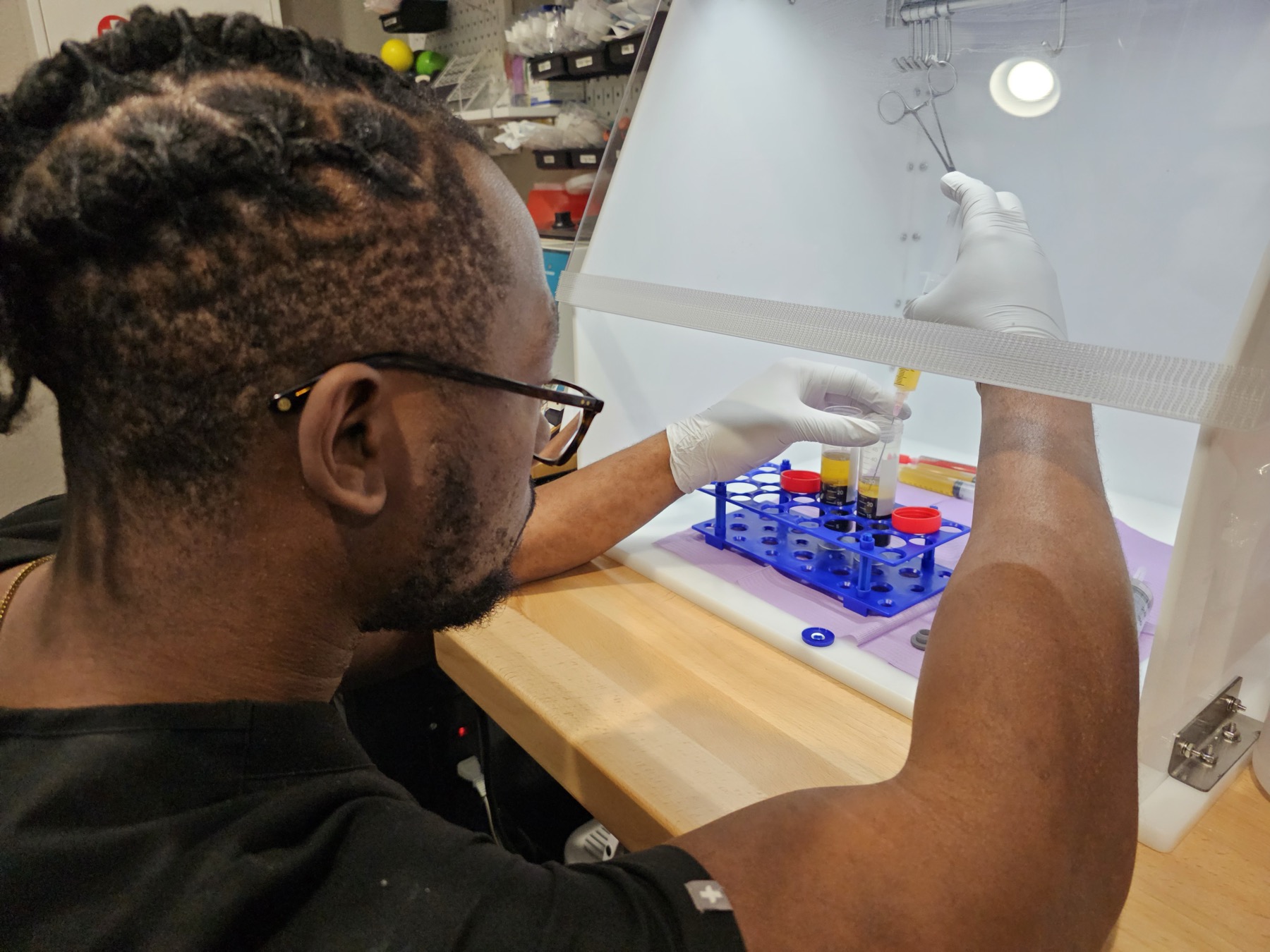
PRP quality begins before the needle enters the skin
PRP preparations vary. Blood-draw volume, centrifugation, platelet yield, leukocyte and red-cell content, activation, anticoagulant, final volume and sterility can influence what reaches the target. Research increasingly reports platelet dose because “PRP” alone does not describe a uniform product. We use a substantial draw and a preparation designed to create a concentrated, dark amber product rather than relying on ordinary diagnostic lab tubes.
Placement matters
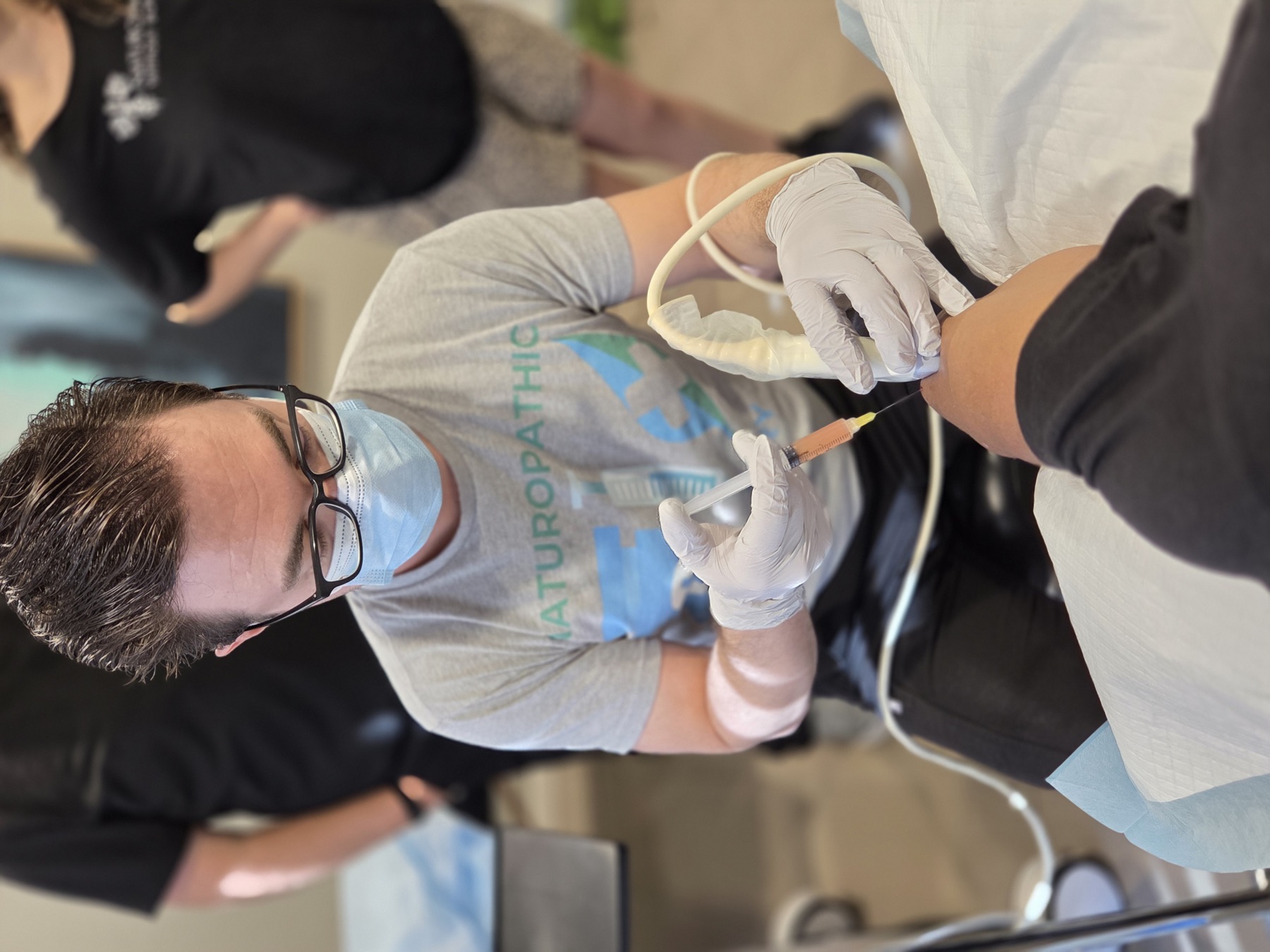
For most orthopedic joint, tendon, ligament and nerve injections, we use real-time ultrasound when clinically appropriate. Across multiple procedures, reviews find ultrasound guidance more accurate than landmark-only placement; evidence for additional clinical benefit varies by condition. Ultrasound is GPS, but the diagnosis still determines the address.
PRP, BMAC and autologous adipose tissue are not interchangeable
PRP comes from blood. Bone marrow aspirate concentrate (BMAC) comes from a marrow aspiration and contains a different mixture of cells and signaling components. Autologous adipose-tissue procedures begin with the patient's own fat. Each has different collection, processing, evidence and regulatory considerations. We describe the actual procedure rather than using “stem cells” as a catch-all.
Be skeptical of “stem cells in a vial”
Off-the-shelf products marketed as stem cells or exosomes may be biologically and legally different from same-patient tissue procedures. The FDA has warned consumers about broad marketing of unapproved regenerative products. Ask what the product is, whether it is FDA-approved for the proposed use, what evidence applies to that exact product and what adverse-event monitoring exists.
Where cortisone fits
Corticosteroid injections can offer useful short-term symptom relief in selected settings. They are not automatically “bad,” and regenerative injections are not automatically “better.” Tradeoffs can include temporary glucose elevation, masking pain during a vulnerable period and concern for tissue or joint effects with repeated use in some situations. The right comparison depends on the goal, diagnosis, timing and alternatives.
The recovery plan is part of the treatment
Healing is not an on/off switch. Appropriate loading, physical therapy, sleep, nutrition, metabolic and hormone context, and enough time to judge the response may all matter. A technically perfect injection cannot compensate for the wrong diagnosis or a plan that ends at the procedure-room door.
Sources
- Platelet dose and PRP outcomes: systematic review and meta-analysis
- American Medical Society for Sports Medicine position statement on ultrasound-guided injections
- Ultrasound versus landmark guidance for knee injections: systematic review
- FDA consumer information on regenerative medicine therapies
- Corticosteroid injections and cartilage outcomes: systematic review and meta-analysis
- Blood glucose after intra-articular steroid injection in diabetes: systematic review